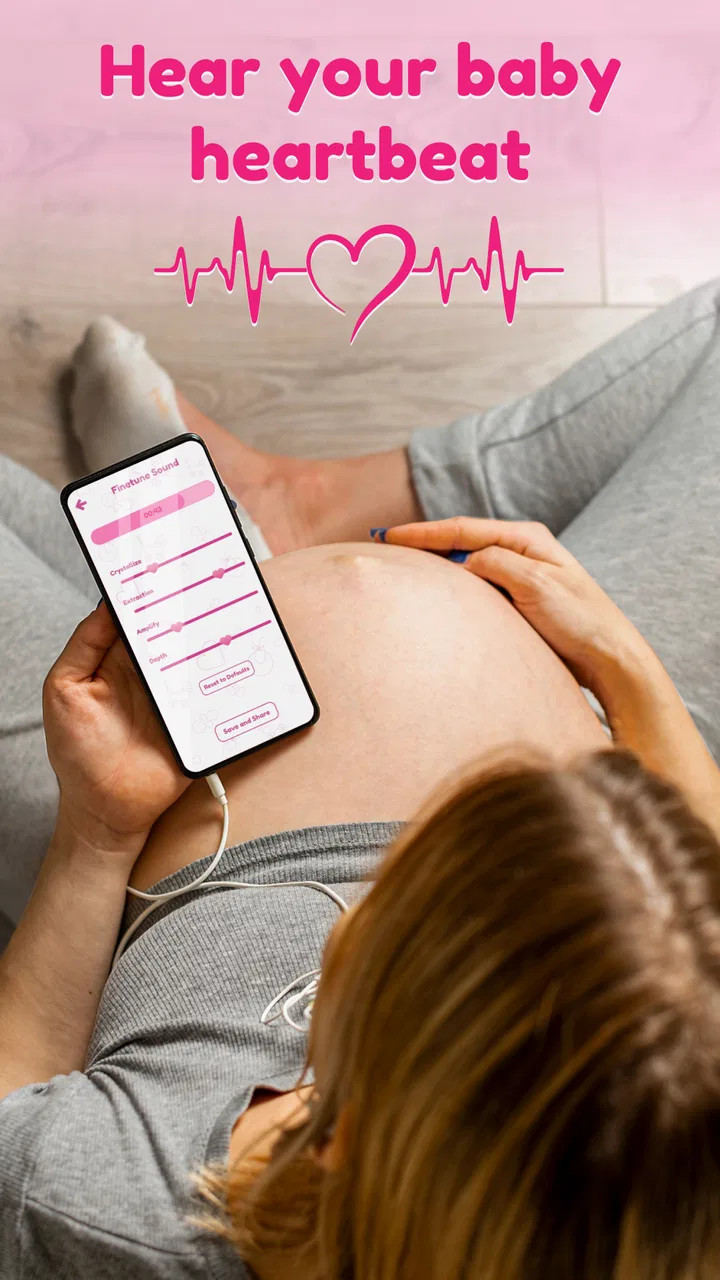
Hear My Baby Heartbeat Monitor
- 4.4
- Rating
- 1.00M
- Installs
- Free
- Price

 Analysis by App-foxy
I approached Hear My Baby Heartbeat Monitor as a parent looking for a simple way to create a quiet, memorable moment during pregnancy. Its purpose is easy to understand: the app is designed to help capture a baby’s heart sounds with a phone. That makes it emotionally appealing, especially for someone who wants a personal recording to keep or share with close family. At the same time, I think it is important to treat it as a keepsake-oriented parenting app rather than a replacement for professional monitoring or medical advice.
The app comes from App Bards and is available free of charge for everyone. It belongs to the Parenting category, works on devices running Android 8.0 or later, and is currently at version 1.2.1. Its release date was March 21, 2024. The public response is encouraging, with a 4.6 average from around 15 thousand ratings and more than a million installs. Those figures suggest that the basic idea is resonating with many families, but they do not change the practical question I would ask before installing it: does the experience remain understandable and usable when a parent is tired, anxious, holding a phone awkwardly, or trying to share a delicate moment with another person?
How readable and easy to navigate is the experience?
My first impression is that the concept does not need much explanation. An app built around hearing a baby’s heartbeat should make its central action obvious, and that clarity matters more than decorative design here. Parents may open it in a quiet room, during a private bonding moment, or while feeling nervous about whether they are doing something correctly. A straightforward path is therefore one of the most valuable qualities the app can have.
You May Also Like

 Blood Strike: 2.5 Anniversary
Blood Strike’s Loadouts Turn Every Drop Into a Tactical Gamble
A close look at Blood Strike’s custom loadouts: how fast access to signature weapons reshapes its battle royale rhythm, rewards preparation, and narrows the gap between fights.

 Pandora - Music & Podcasts
Pandora’s Music Is Easy to Start, but Harder to Recover
Pandora’s strength is its low-effort path from a seed to a station. Its weak spot is how much confidence it asks you to place in connection, setup, and quiet recovery.

 8 Ball Pool
 Is Built on Rivalries, Rematches, and Routine
A close look at the rivalries, rematches, shared routines, and unanswered safety questions that turn a quick pool match into a persistent mobile community.

 Samsung Music
’s Quiet Strength Is Playing What You Already Own
Its reach comes less from spectacle than from dependable access to a personal library. That simplicity is both the app’s strongest retention engine and its ceiling.

 AccuWeather: Weather Radar
AccuWeather Review: A Quick, Clear Forecast for Everyday Decisions
For everyday plans, the best forecast is the one you can understand quickly. AccuWeather makes rain timing, radar, and local conditions easy to act on, with a few trade-offs.

 Hill Climb Racing
Why Hill Climb Racing Still Turns Crashes Into One More Run
A tiny car, a bumpy hill and one more upgrade: Hill Climb Racing keeps resurfacing because its simple chaos makes every near-miss feel personal.
More From Our News Desk



I found that this kind of app benefits from a calm, uncluttered approach. The user should be able to distinguish the listening or recording action from secondary controls without studying a manual. Large, clearly named controls are especially helpful for anyone using a phone with reduced vision, reading difficulty, limited dexterity, or simply one hand occupied. If the interface presents too many similar buttons, the emotional purpose of the app gets buried under unnecessary decisions.
Text readability also matters more than it might seem. A parent may use the app in dim lighting, while lying down, or with the phone held at an angle. Strong contrast, comfortable text size, and labels that describe an action rather than relying only on an icon would make the experience easier for a wider range of people. These are practical accessibility qualities, not cosmetic extras. They reduce hesitation and help users understand what the app is asking them to do.
One useful habit is to explore the main screen before trying to capture anything. I would look for the recording control, playback option, and any way to save or share a result. Doing this first avoids fumbling once the phone is positioned. It also gives a user a chance to decide whether the app’s wording makes sense to them. If a control is unclear, that is a sign to pause rather than repeatedly tapping and hoping for the right outcome.
The app’s appeal is strongest when the navigation stays focused on one task. I would not expect the same depth of menus found in a full pregnancy tracker, and that is probably an advantage for people who want a single-purpose tool. On the other hand, anyone expecting appointment tracking, symptom logs, week-by-week education, or detailed family profiles will likely find this narrower experience insufficient. It is better understood as a focused heartbeat-recording companion than as an all-in-one pregnancy application.
Reading the result without jumping to conclusions
There is an important difference between an app making a sound easy to access and an app interpreting that sound medically. I would use the playback function as a personal listening experience, not as a diagnosis. A clear recording can be comforting, but an unclear recording does not automatically mean something is wrong. The app should be approached with that distinction in mind, particularly by users who are prone to anxiety.
For a more readable workflow, I would keep the phone screen at a comfortable brightness, avoid rushing through prompts, and replay a saved sound only when I am calm enough to judge it sensibly. If the app uses labels or instructions that feel too small or vague, changing the phone’s system text size or display scaling may help, although the result depends on the device. This is one area where a person with visual needs should test the interface early rather than assuming every screen will adapt perfectly.
Motor, hearing, and sensory considerations
The physical side of using a heartbeat-recording app deserves as much attention as the interface. Capturing a sound may require keeping the phone in a particular position and holding it steadily. That can be difficult for someone with tremors, joint pain, reduced grip strength, or limited range of motion. It can also be awkward for anyone who is alone and trying to position the device without disturbing their posture.
I would set up the environment before starting. A stable surface, a comfortable seated or reclined position, and a phone case that is not slippery can reduce unnecessary strain. If another trusted person is present, asking them to handle the phone may make the session more relaxed. This is a small but meaningful adjustment: the parent can concentrate on comfort and listening instead of trying to maintain a precise grip.
People with hearing loss may not get the same benefit from an experience centered on sound. If the app provides a visual indication of activity or a way to review a recording through another person, that could make it more usable, but I would not assume that an audio-first tool automatically offers an equivalent visual experience. Someone who is deaf or hard of hearing may prefer to involve a partner, use a compatible hearing device if supported by the phone, or choose a pregnancy tool designed around visual information and tracking rather than listening.
Sensory sensitivity is another consideration. Sudden playback, amplified audio, or repeated attempts to locate a sound could become uncomfortable for users who are sensitive to noise. I would begin at a low phone volume and use headphones only if they are comfortable and safe in the situation. A quiet room is useful, but complete silence is not always necessary; a familiar, controlled environment can be less stressful than trying to eliminate every background sound.
The app may be emotionally intense as well as technically demanding. Some parents will find the heartbeat deeply reassuring, while others may become distressed if they cannot capture anything quickly. That reaction is not a failure of the user. Pregnancy changes, body position, background noise, and device handling can all affect the experience. I would set a time limit for trying, stop if frustration rises, and contact a healthcare professional when the concern is medical rather than sentimental.
A realistic everyday use case
Imagine a parent at home after work, hoping to share a private moment with a partner who is away for the evening. The parent sits comfortably, silences unnecessary notifications, opens the app, and prepares the phone before beginning. Instead of treating the first attempt as a test of health, they treat it as an attempt to make a personal recording. If the sound is captured, they can listen together later. If it is not, they can stop without turning the evening into a stressful search for reassurance.
That scenario shows where the app can fit naturally. It is useful for creating a small memory, involving a partner who cannot be physically present, or giving close family a recording to hear. The workflow is less suitable when the user needs reliable clinical information, immediate reassurance about a symptom, or an interpretation of what the sound means. In those situations, a midwife, doctor, or established medical service is the better option.
Access in different places and circumstances
Situational access is easy to overlook. A person may use the app in a bedroom, a shared home, a hospital waiting area, or while traveling. Each setting changes the experience. Background conversation, television, traffic, and household appliances can make listening harder. A user with sensory processing differences may need a quieter location, while someone with limited mobility may need to plan where the phone can rest.
I would prepare a small routine rather than opening the app impulsively. Choose a comfortable position, reduce nearby noise, place the phone within reach, and decide in advance who will help if the recording is difficult. This makes the app more inclusive because it shifts some of the burden away from precise hand movements and hurried decisions. It also makes the experience more predictable for users who depend on routines.
Sharing is another practical question. A recording intended for a partner or relative may be emotionally valuable, but users should think about where personal files are stored and who receives them. I would share only with people I trust and avoid sending a recording through a public channel. The app’s role is personal, so a cautious sharing habit is sensible even when the content seems harmless.
For parents who speak English as a second language, clear everyday wording is particularly important. Instructions should be easy to understand without relying on technical pregnancy vocabulary. Users who need a different language, screen reader support, or stronger text customization should test the app’s main flow immediately. If the essential action is understandable and the controls are consistently labeled, the learning curve stays manageable. If not, the app may create more uncertainty than comfort.
Older relatives can also be part of the experience. A grandparent with limited vision or hearing may enjoy the recording, but they may need the file played through a larger device or shared with someone who can explain what they are hearing. That is a useful distinction: the app can help create a family memory, while the best way to consume that memory may be outside the phone used to make it.
Where the experience still has barriers
The biggest barrier is the gap between emotional promise and practical certainty. Hearing a heartbeat can feel meaningful, but the app should not be treated as a clinical monitor. A person who is worried about fetal movement, pain, bleeding, pregnancy complications, or any other health concern should not use a successful recording as proof that everything is fine. The same applies in reverse: difficulty capturing a sound should not be treated as proof of a medical problem.
That limitation affects who should skip the app. I would not recommend it as the main choice for someone looking for medical-grade monitoring, professional interpretation, or a structured record to take to appointments. It is also not ideal for a user who knows that uncertain results will trigger repeated checking. A conventional pregnancy tracker may be more useful for education and appointments, while direct professional care is more appropriate for health concerns.
There is also a trade-off between simplicity and support. A focused app can be less intimidating than a large pregnancy platform, but it may not provide the broader context some parents need. Someone who wants nutrition guidance, reminders, appointment organization, or symptom journaling will probably prefer a fuller pregnancy app. Someone who wants only a personal audio memory may appreciate the narrower purpose of this one.
Device differences can create friction too. Phones vary in microphone quality, speaker output, screen size, and physical shape. A user with an older handset may have a different experience from someone with a newer model, even when both meet the minimum operating-system requirement. I would test the app gently rather than assuming that a phone’s general audio quality guarantees a useful result.
Motor accessibility may remain limited if the app requires sustained positioning without offering an easier alternative. Users with reduced strength should avoid holding the phone in an uncomfortable way for a long period. A stand or helper can make a difference, but needing extra equipment or another person is itself a barrier. This is why I see the app as most accessible when used flexibly, with the surrounding routine adapted to the person rather than forcing every user into the same physical method.
Finally, emotional accessibility matters. The app’s subject is intimate, and not every parent will experience it as relaxing. Some may feel pressure to produce a recording for relatives or compare their experience with friends. I would recommend setting expectations before opening it: the goal is to try a personal listening activity, not to pass a test. That mindset prevents the app from becoming another source of pregnancy stress.
My inclusive verdict on Hear My Baby Heartbeat Monitor
After considering how it fits different users and situations, I see this as a warm, focused parenting app with a clear emotional use case. Its free price and Everyone age rating make it approachable, and the strong response from its large user base suggests that many people enjoy what it is trying to provide. App Bards has chosen an idea that is easy to understand, especially for parents who want a recording rather than a complicated pregnancy dashboard.
I would recommend it to a parent who wants to try capturing a private keepsake, understands that phone-based listening is not medical monitoring, and is comfortable adapting the setup to their own needs. It can be especially nice for sharing a moment with a partner or family member who cannot be present. The best results will come from a calm room, a stable position, realistic expectations, and a willingness to stop rather than repeat the attempt anxiously.
I would be more cautious about recommending it to people who need strong visual alternatives to audio, who have difficulty holding a phone steadily, or who require clinical information. For those users, a more accessible pregnancy tracker, a larger playback device, help from a trusted person, or direct support from a healthcare professional may be a better fit. The app’s simplicity is a strength, but it also means it should not be asked to solve problems outside its narrow purpose.
My bottom line is that this is best treated as a memory-making tool, not a medical decision-making tool. Used with that boundary in place, Hear My Baby Heartbeat Monitor can add a personal, shareable moment to pregnancy. Its inclusive value depends less on technical promises and more on how thoughtfully the user sets up the experience: readable display, comfortable handling, controlled sound, patient expectations, and professional care whenever health concerns enter the picture.
FAQs for Hear My Baby Heartbeat Monitor
01How does the Hear My Baby Heartbeat Monitor app work?
The Hear My Baby Heartbeat Monitor app uses the microphone on your smartphone to detect and amplify your baby's heartbeat. It is designed to work best from around 20 weeks of pregnancy. For optimal results, users should follow the app's guidelines on positioning and environment.
02Is the Hear My Baby Heartbeat Monitor safe to use during pregnancy?
Yes, the app is safe to use as it doesn’t emit any radiation or ultrasound. It simply uses your device’s microphone to amplify sound. However, it should not replace professional medical advice or regular check-ups with your healthcare provider.
03What devices are compatible with the Hear My Baby Heartbeat Monitor app?
The app is compatible with most iOS and Android devices. However, performance may vary depending on the microphone quality of your device. It is recommended to check the app’s compatibility section in the app store to ensure it works with your specific model.
04Can I record and share my baby's heartbeat using the app?
Yes, the Hear My Baby Heartbeat Monitor app allows you to record your baby's heartbeat. You can save these recordings and share them with family and friends directly through the app, making it easy to keep loved ones updated on your pregnancy journey.
05Do I need any additional equipment to use the app effectively?
No additional equipment is necessary, but using headphones can improve the listening experience. The app relies on your phone’s built-in microphone, so ensuring a quiet environment and following the app’s instructions will help achieve the best results.
Pros
- Easy to use with intuitive interface.
- Accurate heartbeat detection.
- Provides detailed results quickly.
- Compatible with most smartphones.
- No additional equipment needed.
Cons
- Requires a quiet environment.
- Not a substitute for medical advice.
- Limited features in the free version.
- May have connectivity issues.
- Some users report occasional bugs.

Hear My Baby Heartbeat Monitor
Gallery